Statement of Account: What It Is, Example and How to Make One
A statement of account lists a client's invoices, payments and credits over a period and shows what they still owe. Here is what to include, with an example.
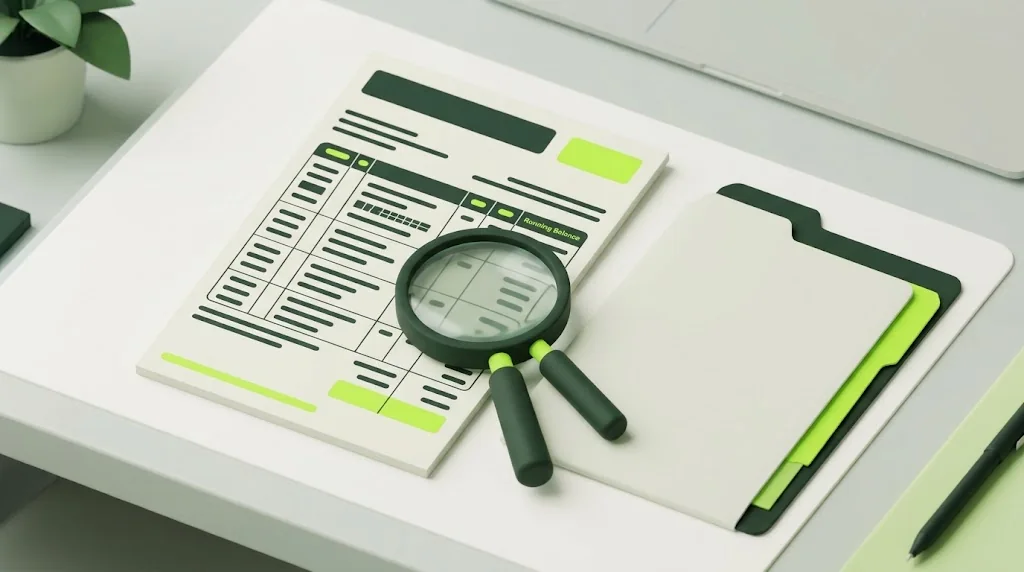
A statement of account is a summary you send to a client that lists all the invoices, payments and credits on their account over a period, and shows the balance they still owe. It is not a request for a new payment like an invoice. It is a running record that helps you and your client agree on what is outstanding.
What is a statement of account?
Think of a statement of account like a bank statement for one customer. Instead of showing a single job, it pulls together everything that happened on that client's account: invoices you issued, payments they made, any credit notes, and the balance at the end.
Businesses that sell to the same customers again and again often send statements once a month. They are common with wholesalers, trade suppliers, agencies on retainer and any business that lets clients buy on credit.
Statement of account vs invoice
The two documents work together, but they do different jobs.
| Invoice | Statement of account | |
|---|---|---|
| Purpose | Requests payment for specific goods or services | Summarises all activity and the balance on an account |
| Covers | One sale or one billing period | Many invoices and payments over a period |
| Shows payments received | Usually not | Yes |
| When sent | After the work or sale | Regularly, often monthly, or when a balance is overdue |
| Used for tax records | Yes, it is the main sales record | Usually not on its own; the invoices are the records |
In short, an invoice says "please pay for this", while a statement says "here is where your account stands". For the basics of the first, see what is an invoice.
What to include on a statement of account
- Your business details: name, address, email and phone, plus your logo if you use one.
- Client details: the client's name, address and account number if you use them.
- Statement date and period: for example, 1 March 2026 to 31 March 2026.
- Opening balance: what the client owed at the start of the period.
- Transactions: each invoice, payment and credit note, with date, reference and amount.
- Running balance: the balance after each line, so the client can follow it.
- Closing balance: the total amount due at the end of the period.
- Ageing summary: how much is current and how much is 30, 60 or 90+ days overdue.
- Payment details: how to pay and who to contact with questions.
Statement of account example
Here is a simple example for a trade supplier. You can use the same layout for your own clients.
Statement of Account
Oakline Supplies Ltd, 12 Mill Road, Leeds
To: Harper Builders, Account no. HB204
Statement date: 31 March 2026
Period: 1 March 2026 to 31 March 2026
| Date | Reference | Description | Charges | Payments | Balance |
|---|---|---|---|---|---|
| 1 Mar 2026 | Opening balance | £1,200.00 | |||
| 4 Mar 2026 | INV 2051 | Timber and fixings | £860.00 | £2,060.00 | |
| 10 Mar 2026 | Payment | Bank transfer, thank you | £1,200.00 | £860.00 | |
| 18 Mar 2026 | INV 2077 | Plasterboard | £540.00 | £1,400.00 | |
| 22 Mar 2026 | CN 014 | Credit for returned items | £90.00 | £1,310.00 | |
| 31 Mar 2026 | Closing balance due | £1,310.00 |
Credit notes reduce the balance just like payments do. If you are not sure when to issue one, read credit note vs invoice.
Ageing summary
An ageing summary at the bottom shows how old the unpaid amounts are. It makes overdue money easy to spot.
| Current | 1 to 30 days | 31 to 60 days | 61 to 90 days | 90+ days | Total due |
|---|---|---|---|---|---|
| £450.00 | £860.00 | £0.00 | £0.00 | £0.00 | £1,310.00 |
Types of statement of account
Balance forward statement
This shows the opening balance, the activity in the period and the closing balance, as in the example above. It is the most common type and the easiest for clients to read.
Open item statement
This lists only the invoices that are still unpaid, with their dates and amounts. Paid invoices drop off. It suits clients who pay invoice by invoice rather than paying a lump sum.
Activity statement
This lists every transaction within a set date range, paid or not. It is useful at year end or when a client asks for a full history of the account.
How to create a statement of account
- Pick the period. Most businesses use a calendar month.
- Find the opening balance. This is the closing balance from your last statement.
- List every invoice you issued to the client in the period, with its number, date and total.
- List every payment and credit note you received or issued in the period.
- Work out the running balance line by line and check the closing figure.
- Add an ageing summary if the client has older unpaid invoices.
- Add payment details and a contact for queries, then send it as a PDF.
Clear invoice numbers make this much easier, because every line on the statement points back to one invoice. Our guide on how to number invoices explains a simple system.
Keeping track of what each client owes
A statement is only as accurate as your records. If you create invoices in the free InvoiceGeneratorKit invoice generator, the History page shows each invoice as paid, unpaid or overdue, and saved clients keep their details in one place. That makes it quick to see which invoices to list on a client's statement and which are still outstanding. Invoices are saved privately in your browser, and you can create an optional free account to sync them across devices.
Covering letter for a statement of account
When you email a statement, keep the message short and neutral. You are sharing information, not making a complaint.
Subject: Statement of account for March 2026, Harper Builders
Hi Lisa,
Please find attached your statement of account for March 2026. The closing balance is £1,310.00, of which £860.00 is now past its due date.
If anything on the statement does not match your records, let me know and I will look into it straight away.
Kind regards,
Mark, Oakline Supplies
If an amount stays unpaid after the statement, follow up with a reminder. See how to chase an unpaid invoice for a step by step approach.
When should you send a statement of account?
- Monthly, for clients who buy from you on credit.
- When a client has several unpaid invoices and needs a single overview.
- When a client's records do not match yours and you need to reconcile.
- At year end, so both sides can close their books with matching figures.
For one off jobs with a single invoice, a statement is rarely needed. A reminder about that invoice is usually enough.
Common mistakes to avoid
- Missing payments. Always check your bank records before you send, so a client who has paid is not chased by mistake.
- No invoice references. Every charge line should show the invoice number so the client can match it.
- Treating it as a new bill. Do not add new charges on the statement itself. Raise an invoice first, then list it.
- Wrong opening balance. Carry over the exact closing balance from the last statement you sent.
Frequently asked questions
Is a statement of account the same as an invoice?
No. An invoice asks for payment for a specific sale, while a statement of account summarises all invoices, payments and credits over a period and shows the balance owed.
How often should I send a statement of account?
Most businesses send them monthly to clients who buy on credit. You can also send one when several invoices are overdue or when your records need reconciling.
Do I need to keep statements of account for tax?
The invoices and payment records are usually the documents tax authorities care about. Keeping statements is still good practice; check local rules or ask an accountant.
What is an ageing summary on a statement?
It splits the unpaid balance by how long it has been outstanding, such as current, 1 to 30 days and 31 to 60 days overdue, so late amounts are easy to see.
Create your invoice now
Add your logo, line items and tax, see it on a real A4 page, then download a clean PDF. Free, with no sign up.