Commercial Invoice: What It Is and How It Differs From Proforma
A commercial invoice is the customs document for international shipments. Learn what to include, see an example and how it differs from a proforma invoice.
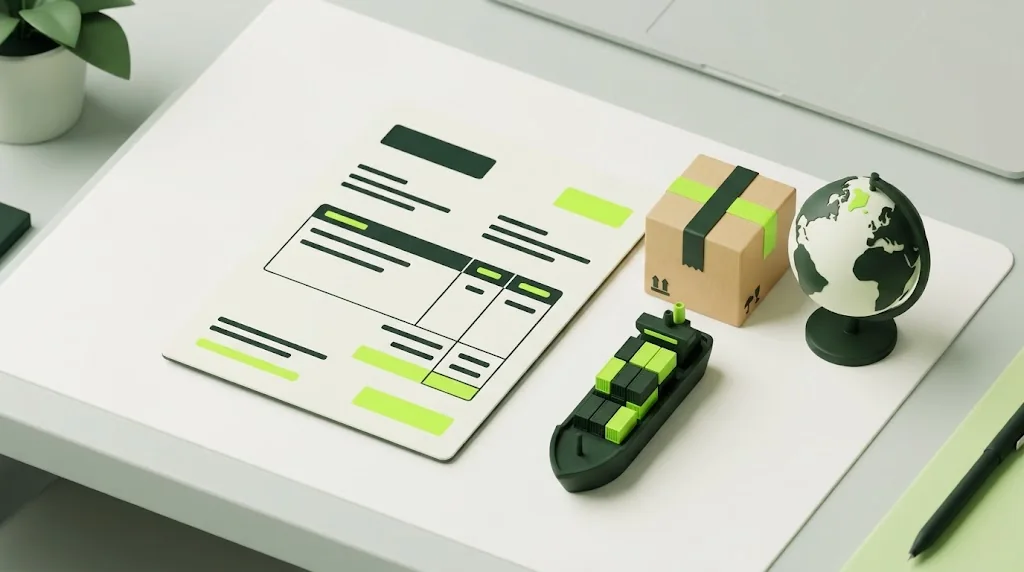
A commercial invoice is the main customs document for goods shipped across borders. It is issued by the seller or exporter and lists what is being shipped, its value, where it was made and who is sending and receiving it, so customs can check the goods and work out any duties and import taxes. A proforma invoice is different: it is a preliminary quote sent before the sale, while the commercial invoice records the actual shipment.
What is a commercial invoice used for?
When you send goods to another country, customs officers in the destination country need to know exactly what is arriving. The commercial invoice gives them that information. It is used to:
- Describe the goods so customs can classify them correctly.
- Declare the value, which is often the basis for import duty and import VAT or sales tax.
- Show the country of origin, which can affect duty rates and trade agreements.
- Identify the exporter, the receiver and, where different, the importer responsible for paying duties.
- Act as a record of the sale between buyer and seller.
Without a correct commercial invoice, a shipment can be held at the border, delayed or returned. Couriers usually ask for one for any shipment of goods leaving the UK or US for another country, and for many shipments between other countries too.
What to include on a commercial invoice
Exact requirements vary by country and courier, but most commercial invoices include these details:
| Field | What to write |
|---|---|
| Title | Commercial Invoice |
| Invoice number and date | Your unique reference and the date issued |
| Exporter or shipper | Name, address, phone and email of the sender |
| Consignee | Name and delivery address of the receiver |
| Importer of record | The party responsible for import duties, if different from the consignee |
| Tax or customs IDs | For example an EORI number for UK and EU trade, or the importer's tax number where required |
| Description of goods | A clear, specific description of each item, not just "parts" or "samples" |
| HS code | The tariff classification code for each type of goods |
| Country of origin | Where each item was made, not where it was shipped from |
| Quantity and unit value | Number of units and the price per unit |
| Total value and currency | The total for all goods, with the currency stated |
| Weight and packages | Net and gross weight, number of boxes or pallets |
| Incoterms | The agreed trade term, such as EXW, FCA, DAP or DDP |
| Reason for export | Sale, gift, sample, repair or return |
| Shipping reference | Tracking number, air waybill or bill of lading number if known |
| Declaration and signature | A statement that the information is true and correct, signed and dated |
Ask your courier or freight forwarder whether they need anything extra for the country you are shipping to.
Commercial invoice example
Here is a simplified example for a UK seller shipping goods to a US buyer:
COMMERCIAL INVOICE
Invoice No: CI 2026 0031
Date: 24 November 2026
Exporter: Fernhill Ceramics Ltd, 3 Kiln Yard, Stoke on Trent, ST1 2AB, United Kingdom
EORI: GB000000000000 (placeholder)
Consignee: Oak and Clay Home Store, 410 Main Street, Portland, OR 97204, USA
Goods:
Handmade stoneware mugs, 48 units at £9.50 = £456.00
Handmade stoneware serving bowls, 12 units at £22.00 = £264.00
HS code: [your tariff code]
Country of origin: United Kingdom
Total value: £720.00 GBP
Packages: 3 cartons, gross weight 28 kg
Incoterms: DAP Portland
Reason for export: Sale
I declare that the information on this invoice is true and correct.
Signed: [Name], Director. Date: 24 November 2026
Look up the correct HS code for your goods using your government's tariff tool. Using the wrong code can lead to the wrong duty being charged or to delays.
Proforma invoice vs commercial invoice
These two documents look alike, which is why they are often confused. The key difference is timing and purpose.
| Proforma invoice | Commercial invoice | |
|---|---|---|
| When it is issued | Before the sale is final or before goods ship | When the goods are shipped |
| Purpose | A quote or preview of the final invoice | Customs declaration and record of the actual sale |
| Binding | Not a demand for payment in the usual sense | Reflects the real transaction and values |
| Used for | Agreeing terms, arranging payment in advance, applying for import licences or letters of credit | Customs clearance and working out duties and taxes |
| Accounting | Not usually recorded as a sale | Matches the sale in your records |
In some cases, customs may accept a proforma invoice when no sale has taken place, for example when you send free samples or goods for repair. In that case the document should still show a realistic value and state the reason, such as "No commercial value, sample". Check with your courier first, as rules vary. For more on proformas, read what is a proforma invoice.
Commercial invoice vs a regular sales invoice
A regular sales invoice asks your customer to pay and includes your payment terms. A commercial invoice is written mainly for customs, so it adds shipping and trade details such as HS codes, country of origin, weight and Incoterms. Many exporters send both: a sales invoice to the buyer for payment and a commercial invoice with the shipment. Our guide to what to include on an invoice covers the sales side.
How to prepare a commercial invoice step by step
- Confirm the sale details. Agree the price, currency and Incoterms with your buyer, often using a proforma invoice first.
- Find the HS codes and origin for each product.
- Collect the parties' details, including EORI or tax numbers where needed.
- List every item with a clear description, quantity, unit value and total.
- Add the shipping details: weight, number of packages and tracking or waybill number.
- Sign and date the declaration.
- Attach copies to the shipment as your courier instructs. Many couriers ask for printed copies in a document pouch on the outside of the parcel, or an electronic upload.
Making the related invoices for free
Many couriers and shipping platforms produce a commercial invoice for you when you book an international shipment, using the details you enter. For the documents around it, the free InvoiceGeneratorKit invoice generator can help. Change the title to Proforma Invoice to send a quote before the goods ship, then create the final invoice for payment once the order is confirmed. You can bill in more than 150 currencies, add shipping and discounts, upload your logo and download a vector PDF with no sign up.
Common commercial invoice mistakes
- Vague descriptions such as "gift" or "goods". Be specific about what the item is and what it is made of.
- Undervaluing goods to reduce duty. This is illegal in many countries and can lead to penalties and seized goods.
- Wrong country of origin. Origin is where the goods were made, not where you are shipping from.
- Missing currency. Always state the currency next to the values.
- Details that do not match the shipping label, packing list or sales invoice.
Customs rules change and differ between countries, so check with your courier, freight forwarder or local customs authority if you are unsure.
Frequently asked questions
What is a commercial invoice?
It is a document issued by the seller or exporter for an international shipment. It describes the goods, their value and origin, and is used by customs to clear the goods and work out duties and taxes.
What is the difference between a proforma invoice and a commercial invoice?
A proforma invoice is a preliminary quote sent before the sale is final or the goods ship. A commercial invoice records the actual shipment and is used for customs clearance.
Who prepares the commercial invoice?
The seller or exporter normally prepares it. Many couriers create one from the details you enter when you book an international shipment.
Do I need a commercial invoice for samples or gifts?
Usually yes. Customs still needs a description and a realistic value, along with the reason for export, such as sample or gift. Check your courier's rules for the destination.
Does a commercial invoice need an HS code?
Most couriers and customs authorities ask for HS codes, as they decide how goods are classified and what duty applies. Use your government's tariff tool to find the right code.

Create your invoice now
Add your logo, line items and tax, see it on a real A4 page, then download a clean PDF. Free, with no sign up.