Net 60 Payment Terms: What They Mean and How to Use Them
Net 60 means the client has 60 days from the invoice date to pay. Learn how to calculate the due date, the pros and cons, and how to write Net 60 on an invoice.
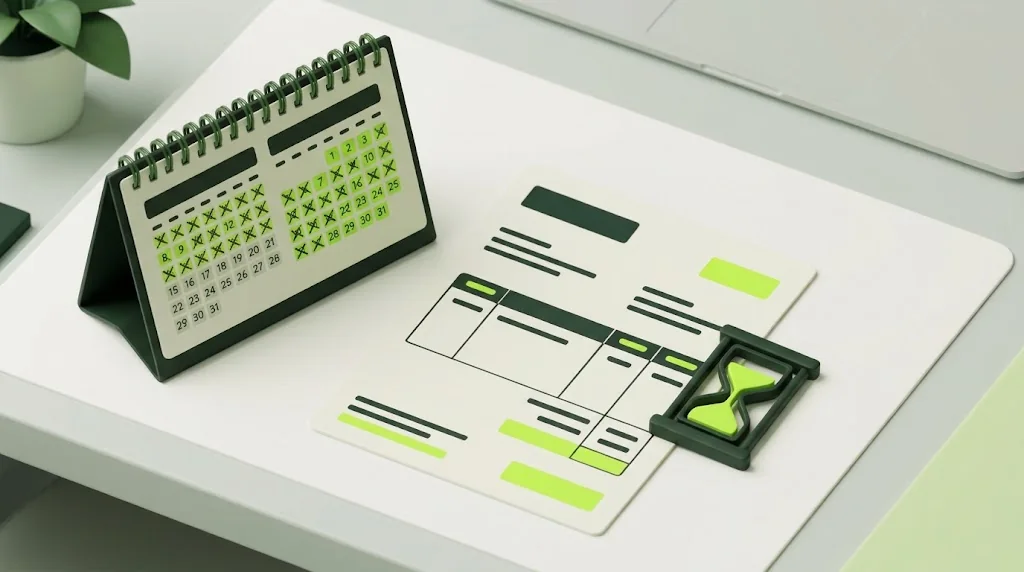
Net 60 payment terms mean the client has 60 days from the invoice date to pay the full amount. For an invoice dated 1 September 2026, payment is due by 31 October 2026. Net 60 is common with larger companies and long supply chains, but it is a long wait for a small business, so agree it carefully.
This guide explains exactly how Net 60 works, how it compares with shorter terms, when it makes sense to accept it, and how to write it on your invoice so there is no confusion about the due date.
What does Net 60 mean?
"Net" refers to the full amount of the invoice after any agreed discounts. "60" is the number of days the client has to pay it. So Net 60 means: pay the full balance within 60 days.
The 60 days normally start on the invoice date, not the date the client opens the invoice and not the end of the month. If you and your client agree a different starting point, such as the delivery date, write that clearly on the invoice and show the exact due date.
Net 60 is one of several standard terms. For the full list, see our guide to invoice payment terms.
How to calculate a Net 60 due date
Count 60 calendar days from the invoice date. Weekends and holidays are included. Here are some examples:
| Invoice date | Net 60 due date |
|---|---|
| 15 January 2026 | 16 March 2026 |
| 15 March 2026 | 14 May 2026 |
| 1 June 2026 | 31 July 2026 |
| 1 September 2026 | 31 October 2026 |
| 1 December 2026 | 30 January 2027 |
Because months have different lengths, Net 60 is not always exactly two calendar months. That is why you should always write the actual due date on the invoice rather than relying on "Net 60" alone.
Net 60 vs Net 30 and other terms
| Term | When payment is due | Typical use |
|---|---|---|
| Due on receipt | Straight away | Small jobs, one time clients, consumers |
| Net 15 | 15 days after the invoice date | Freelancers and small businesses |
| Net 30 | 30 days after the invoice date | The most common business to business term |
| Net 60 | 60 days after the invoice date | Large companies, retailers, wholesale and manufacturing |
| Net 90 | 90 days after the invoice date | Some very large buyers and long supply chains |
The longer the term, the longer your money is tied up. Net 60 means you could finish a job in early March and not see the money until May.
Who uses Net 60 terms?
Net 60 is most common when a large business buys from a smaller one. You will often see it with:
- Large retailers buying stock from suppliers
- Manufacturers buying parts and materials
- Big corporate clients that pay suppliers on a fixed payment cycle
- Agencies and main contractors that wait to be paid by their own client before paying subcontractors
For buyers, longer terms help cash flow because they keep the money for longer. For sellers, it works the other way round.
Pros and cons of Net 60 for your business
Possible benefits:
- It can help you win work with large clients who only offer longer terms.
- Big clients can bring steady, repeat orders.
- Offering longer terms can be a competitive advantage in some industries.
Possible drawbacks:
- You wait two months for money you have already earned.
- You still have to pay your own costs, staff and suppliers in the meantime.
- The longer an invoice is outstanding, the greater the risk something goes wrong, such as a dispute or the client running into trouble.
- If the client pays late on top of Net 60, the wait can stretch to three months or more.
Before you accept Net 60, work out whether you can cover your costs for that long. If a single client makes up a big part of your income, the risk is higher.
Is Net 60 allowed?
In most cases businesses are free to agree their own payment terms, but some countries set limits.
In the UK, if no payment terms are agreed, the default period for business to business payments under late payment law is 30 days. Contract terms longer than 60 days are allowed between businesses only if they are not grossly unfair to the supplier, and public sector bodies are generally expected to pay within 30 days. The UK government has also consulted on tougher rules on long payment terms, so check current guidance.
In the US, there is no general federal limit on private business payment terms, although government contracts and some states have their own prompt payment rules. Industry norms vary.
If you are unsure what applies to you, ask an accountant or legal adviser. For UK late payment rights, see our guide to late payment interest in the UK.
How to write Net 60 on an invoice
Place the payment terms near the total and include all of these:
- The term itself: "Net 60".
- The exact due date.
- How to pay: bank details or a payment link.
- Any early payment discount or late fee you have agreed in advance.
Here is wording you can copy:
Payment terms: Net 60. Payment of $4,800.00 is due by 14 May 2026. Please pay by bank transfer to the account below and quote invoice number INV0310 as the reference.
And with an early payment discount:
Payment terms: 2/10 Net 60. Take 2% off the total if paid by 25 March 2026. Otherwise the full amount of £3,200.00 is due by 14 May 2026.
In the free InvoiceGeneratorKit invoice generator you can type your own terms, and the due date is shown on the invoice. It also tracks which invoices are paid, unpaid or overdue in History, which helps when you are waiting 60 days.
How to get paid on time with Net 60
- Agree the terms in writing first. Put Net 60 in your quote or contract, not just on the invoice.
- Invoice the day the work is done. Every day you wait adds to the 60.
- Get the details right. Quote any PO number and send the invoice to the right accounts address. See what is a PO number.
- Confirm receipt. A quick check that the invoice reached the right person avoids a nasty surprise on day 60.
- Send a reminder before the due date. A friendly note a week before is often enough.
- Follow up straight away if it is late. Our guide on how to chase an unpaid invoice has wording you can use.
- Ask for a deposit or stage payments on big jobs so you are not carrying the whole cost for two months.
Negotiating shorter terms
If a client proposes Net 60, you can ask for something shorter. Many clients will accept Net 30 for a small supplier, especially if you ask before the contract is signed. You could also offer a small early payment discount, or suggest a deposit with the balance on Net 60. Keep the tone polite and practical: you are not refusing the work, you are asking for terms your business can sustain.
Frequently asked questions
What does Net 60 mean on an invoice?
It means the full invoice amount must be paid within 60 days of the invoice date. For an invoice dated 1 June 2026, payment is due by 31 July 2026.
Does Net 60 include weekends?
Yes. Net terms count calendar days, including weekends and public holidays, unless your contract says otherwise.
Is Net 60 the same as two months?
Not exactly. Because months vary in length, 60 days can end a day or two before or after the same date two months later, so always write the exact due date.
What does 2/10 Net 60 mean?
The client can take 2% off if they pay within 10 days. Otherwise the full amount is due within 60 days.
Should a small business accept Net 60?
Only if you can cover your costs while you wait. You can also ask for Net 30, a deposit or stage payments instead.
Create your invoice now
Add your logo, line items and tax, see it on a real A4 page, then download a clean PDF. Free, with no sign up.