Late Payment Interest UK: How to Charge Interest on an Overdue Invoice
UK businesses can charge interest and a fixed fee when another business pays late. Here is how the statutory rate works, how to calculate it and what to put on your invoice.
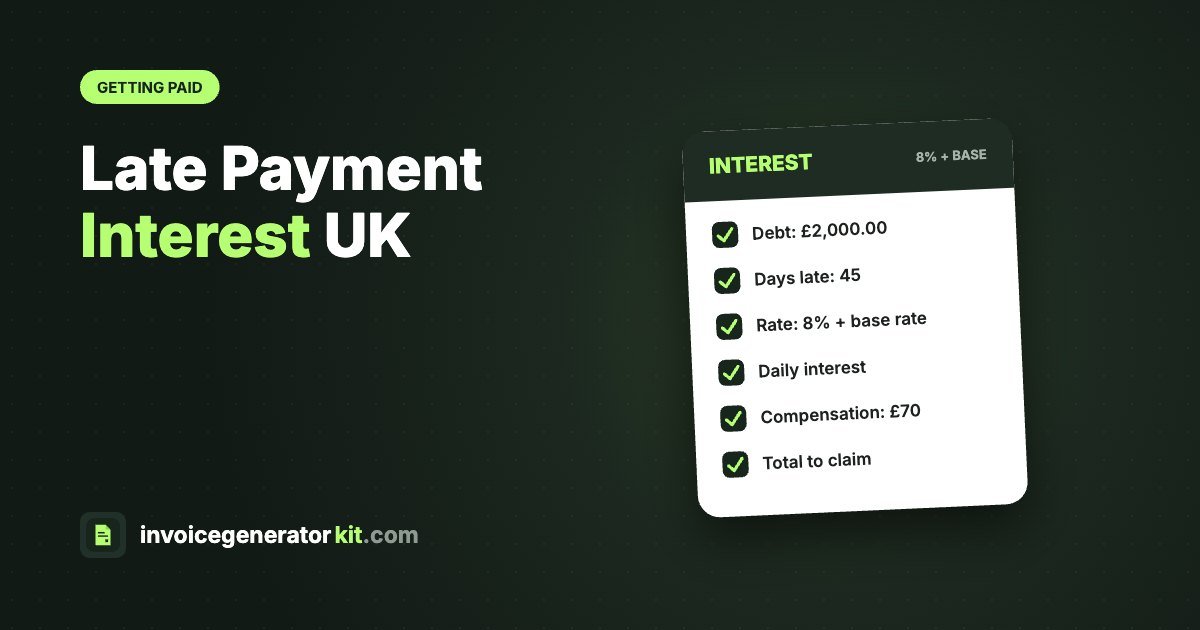
In the UK, if another business pays your invoice late you can charge statutory interest at 8% a year above the Bank of England base rate, plus fixed compensation of £40, £70 or £100 depending on the size of the debt. This comes from the Late Payment of Commercial Debts (Interest) Act 1998 and applies even if your contract does not mention it. It does not apply to sales to consumers.
When can you charge late payment interest?
- The sale is business to business, including sole traders and the public sector.
- The payment is late: after the agreed due date, or 30 days after the customer received the invoice or goods if no date was agreed.
- The debt is not in genuine dispute.
Late payment compensation amounts
| Debt amount | Fixed compensation |
|---|---|
| Up to £999.99 | £40 |
| £1,000 to £9,999.99 | £70 |
| £10,000 or more | £100 |
You can also claim reasonable costs of recovering the debt above this amount, such as debt collector fees.
How to calculate late payment interest
- Add 8% to the Bank of England base rate that applies (the rate on 31 December for debts due January to June, or on 30 June for debts due July to December).
- Work out the daily interest: debt × rate ÷ 365.
- Multiply by the number of days late.
- Add the fixed compensation.
Worked example
Assume the reference base rate is 4%, so the statutory rate is 12%. An invoice for £2,000 is paid 45 days late.
| Step | Calculation | Result |
|---|---|---|
| Daily interest | £2,000 × 12% ÷ 365 | £0.66 |
| Interest for 45 days | £0.6575 × 45 | £29.59 |
| Fixed compensation | Debt between £1,000 and £9,999.99 | £70.00 |
| Total you can claim | £99.59 |
Check the current base rate on the Bank of England website before you calculate, as it changes.
Wording for your invoice and terms
Add a line like this to your payment terms or invoice notes:
"Payment is due within 14 days. We reserve the right to claim interest and compensation on late payments under the Late Payment of Commercial Debts (Interest) Act 1998."
Our free invoice generator has a notes and terms box for exactly this. For choosing the terms themselves, see invoice payment terms explained.
How to claim it
- Send a reminder, then a firm email stating that interest and compensation now apply. Our guide to chasing an unpaid invoice has templates.
- Issue a new invoice or statement for the interest and compensation, referencing the original invoice number.
- If still unpaid, include the interest in your letter before action and any court claim.
Should you always charge it?
It is your legal right, but many small businesses use it as leverage rather than charging it every time. Mentioning it in a firm reminder is often enough to get paid. For repeat late payers, charging it consistently changes behaviour fast. The official details are on GOV.UK's late commercial payments page.
Frequently asked questions
What is the statutory interest rate for late payment in the UK?
8% a year above the Bank of England base rate. The base rate used is the one in force on 31 December for debts that fall due between January and June, and on 30 June for debts that fall due between July and December.
Can I charge late payment interest to individuals?
Not under the statutory scheme, which only covers business-to-business sales. You can charge interest to consumers only if it was clearly agreed in your terms beforehand and is fair.
How much compensation can I claim for a late payment?
A fixed sum of £40 for debts under £1,000, £70 for debts of £1,000 to £9,999.99 and £100 for debts of £10,000 or more, per invoice, in addition to interest.
Do I have to tell the client before charging interest?
You do not need to have mentioned it beforehand, as the right comes from the law. It is still good practice to state it in your payment terms and on your invoice so clients are not surprised.
Can I set my own late payment interest rate?
Yes, you can agree a different rate in your contract, but it must be a substantial remedy. If no rate is agreed, the statutory rate applies automatically.
Create your invoice now
Add your logo, line items and tax, see it on a real A4 page, then download a clean PDF. Free, with no sign up.