Invoice vs Receipt: What Is the Difference?
An invoice asks for payment. A receipt proves it was paid. Here is how they differ, what each one should include, and when to send them.
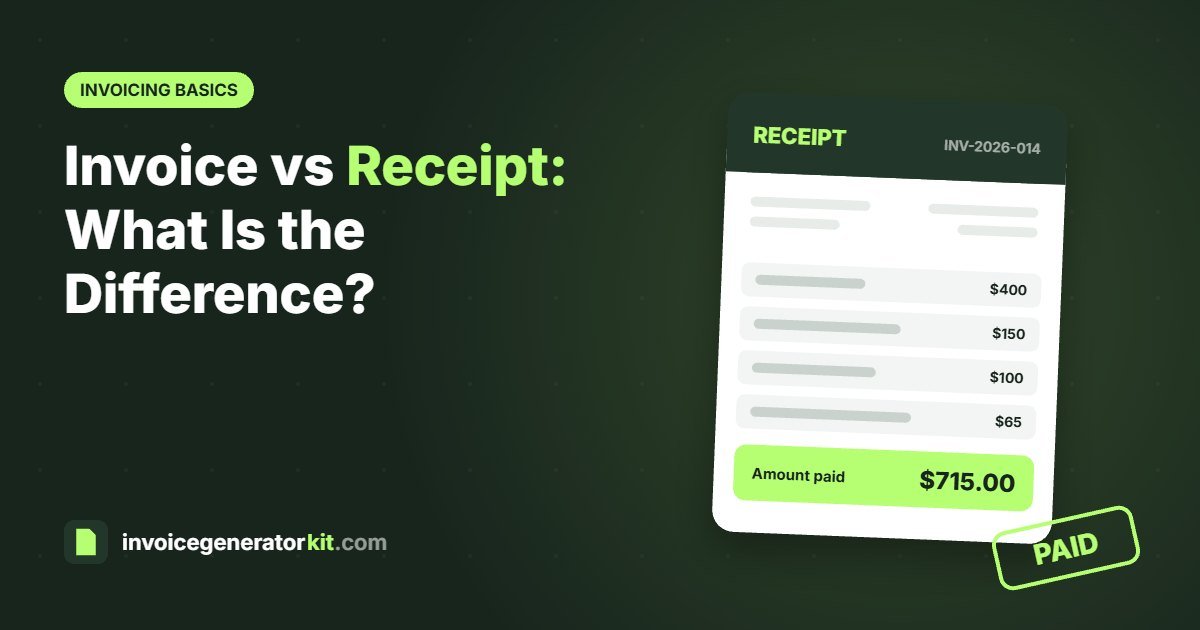
An invoice is a request for payment that you send after delivering goods or services. A receipt is proof that payment has been received, sent after the client pays. In short, the invoice comes first and says "please pay", and the receipt comes second and says "thank you, you have paid".
Invoice vs receipt at a glance
| Invoice | Receipt | |
|---|---|---|
| Purpose | Asks for payment | Confirms payment |
| When it is sent | After the work, before payment | After payment |
| Key dates | Invoice date and due date | Payment date |
| Shows | Amount due | Amount paid and how it was paid |
| Used for | Getting paid, tracking what you are owed | Proof of purchase, refunds, expense claims |
What is an invoice?
An invoice lists what you supplied, how much it costs and when the client must pay. It includes an invoice number, your details and the client's details, line items, tax, the total due, the due date and your payment details. Until it is paid, an invoice is a record of money you are owed. See our full checklist of what to include on an invoice.
What is a receipt?
A receipt confirms that a payment has been made. It usually shows:
- A receipt number, or the invoice number it relates to
- The date the payment was received
- Your business name and the customer's name
- What was paid for
- The amount paid and any tax included
- The payment method, such as card, cash or bank transfer
Shops hand out receipts at the till. Service businesses often send one by email once an invoice has been paid.
When to send each one
- Quote or estimate before the work, if the client wants a price first.
- Invoice once the work is done or the goods are delivered.
- Receipt once the client has paid.
If a client pays upfront, at a till or online checkout for example, you may only need a receipt. If you bill after the work, you need an invoice and, ideally, a receipt when it is settled.
Can an invoice be used as a receipt?
Yes, if it clearly shows it has been paid. Many businesses mark the paid invoice with the word PAID, the payment date and the payment method, then send it back to the client. That gives the client proof of payment that matches the original invoice exactly.
In InvoiceGeneratorKit, click Mark paid and a PAID stamp is added to the invoice in your theme colour. Download the PDF and send it as the receipt. You can also change the document title to Receipt if you prefer.
Why the difference matters
- Bookkeeping: invoices show what you are owed, receipts show what you have collected.
- Tax: keep both. Tax authorities may ask for invoices and proof of payment for your records.
- Clients: many clients need a receipt to claim the cost as a business expense.
- Disputes: a receipt settles any question about whether a payment was made.
Frequently asked questions
Is a receipt the same as an invoice?
No. An invoice asks for payment and a receipt confirms payment was received. An invoice marked as paid can work as a receipt.
Do I need to send a receipt after an invoice is paid?
It is not always required, but it is good practice. Many clients need proof of payment for their own records and expense claims.
What comes first, an invoice or a receipt?
The invoice comes first, when you request payment. The receipt comes after the client has paid.
How do I make a receipt for free?
Use a free tool such as InvoiceGeneratorKit. Create the invoice, click Mark paid to add a PAID stamp, or set the document title to Receipt, then download the PDF.
Create your invoice now
Add your logo, line items and tax, see it on a real A4 page, then download a clean PDF. Free, with no sign up.